
First Round Leader Betting in Golf: The Variance Market with the Best Each-Way Edge
 Available in US

The market that pays my mortgage in good seasons is also the market that quietly destroys most casual punters’ Thursdays. First Round Leader is the highest-variance massive-stakes market on the Tour calendar — 156 players, one round, one winner, longshot odds that the headlines treat as ridiculous. Exactly because the variance is brutal, it’s also where the structural edges sit most cleanly. Nine years of Thursday afternoons have taught me that the punters who win at FRL are not the ones with the best opinions on players. They’re the ones who read the tee sheet and the forecast before the leaderboard goes live, then size the ticket with discipline. The market is the most edge-rich and the most ruinous in the same breath, and the difference between the two outcomes is preparation.
What FRL Actually Settles On
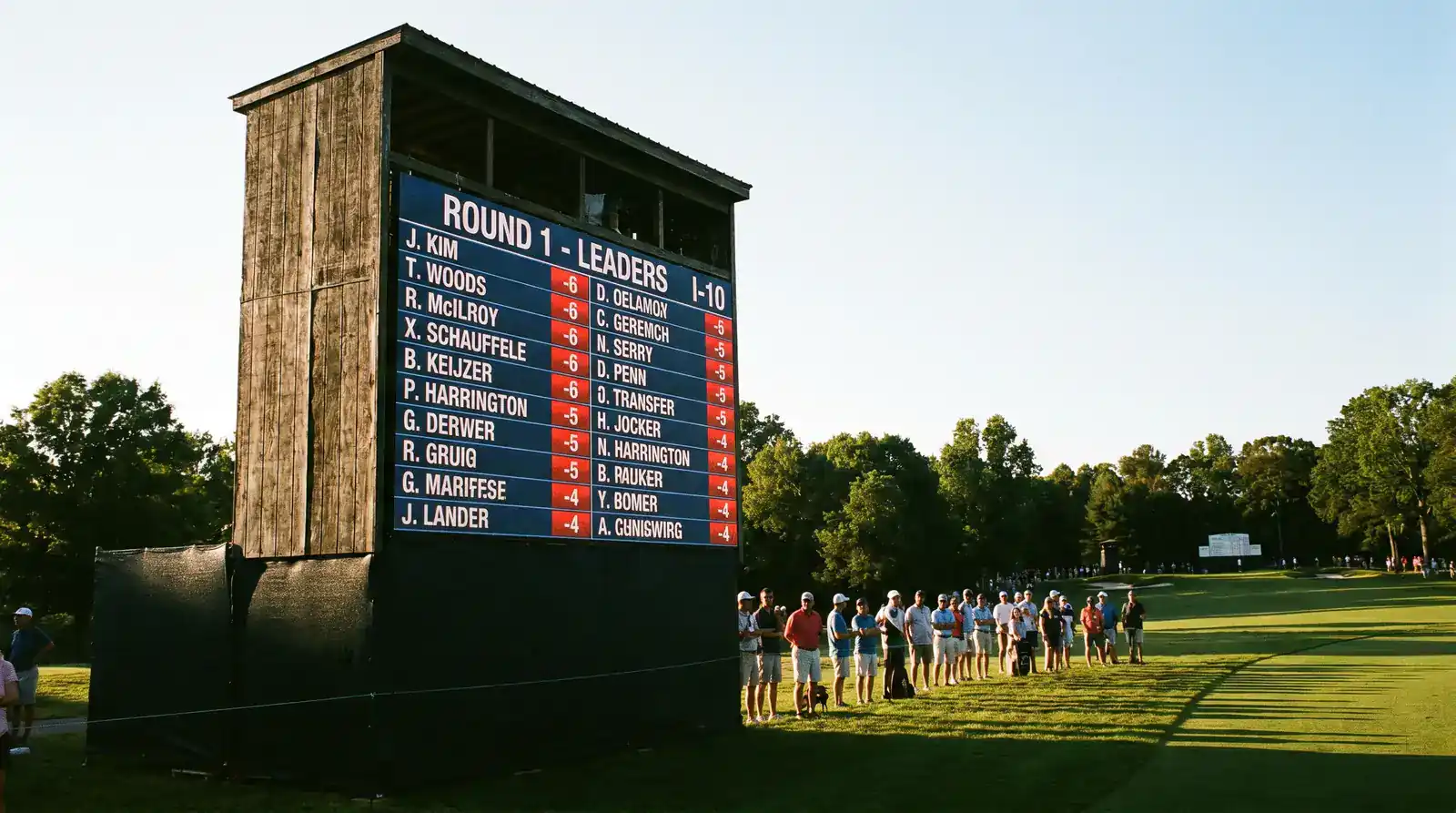
The simple bit first. A First Round Leader bet wins if your player holds the outright lead at the end of Thursday’s play. Tied at the top — dead heat fires, your effective stake gets divided by the number of players tied at the lead, and your dividend collapses accordingly. With 156-player fields at most Tour stops and at all four Majors, where roughly 65 per cent of the Open field arrives through 28 separate exemption categories, the leaderboard at the end of day one is dense enough that ties at the top are frequent rather than exceptional.
Markets close at the start of Thursday play and settle on the official end-of-round score. If a round runs over into Friday morning due to weather suspension, the FRL settles on the eventual completion of round one, not on the position at suspended play. That’s a clause I’ve seen punters misread more than once when storms roll in around 5pm. Read the operator’s suspension policy in advance; the rules are uniform across the major UK books but not always intuitive.
Reading the Tee Sheet Before the Odds Move
The single most exploitable feature of FRL pricing is that bookmakers publish their lines before the tee sheet is finalised, and adjust afterwards more slowly than the sharp money does. The morning wave at most US PGA Tour stops tees off between 7am and 9am local. The afternoon wave goes from 12.30pm to 2.30pm. The pricing engines treat the two waves as identical on Wednesday afternoon. The weather does not.
A windy Thursday afternoon at a coastal Major is the textbook case. The morning wave plays in 8 to 12mph winds; by 2pm the breeze builds to 18 to 22mph and the scoring average shifts by a stroke and a half across the field. The morning wave routinely produces six or seven of the top ten at the close of Thursday’s play. The afternoon wave routinely produces none of them. If you’ve placed your FRL ticket on a player from the afternoon wave, you’re not betting against the field. You’re betting against the weather forecast that the bookmaker published before the wave split was confirmed.

The same effect runs in reverse on a calm morning at a links course where the wind builds in the wrong direction in the afternoon — backing morning-wave longshots becomes the structurally correct play even at headline odds of 80/1 plus. The asymmetry isn’t subtle. The asymmetry is the whole game. A side note worth keeping: research published in 2025 found that Strokes Gained Putting variation at the PGA Tour level is statistically close to noise once the underlying field strength is accounted for. So backing a player on the assumption that “his putter’s hot this week” is not a signal — backing him on a morning tee time at a venue where the afternoon forecast says 20mph gusts is.
What the Met Office Knows Before the Bookmaker Reacts
The forecast windows that move FRL prices most decisively are the ones that change between Wednesday night and Thursday dawn. UK bettors with sustained access to Met Office detail and the equivalent NOAA discussion for US events have a 4 to 8 hour edge on bookmaker price updates during the most volatile forecast windows. That isn’t a huge edge in the broader sense. In a market where afternoon weather can move a player’s leaderboard probability by 30 to 40 per cent, it’s substantial.
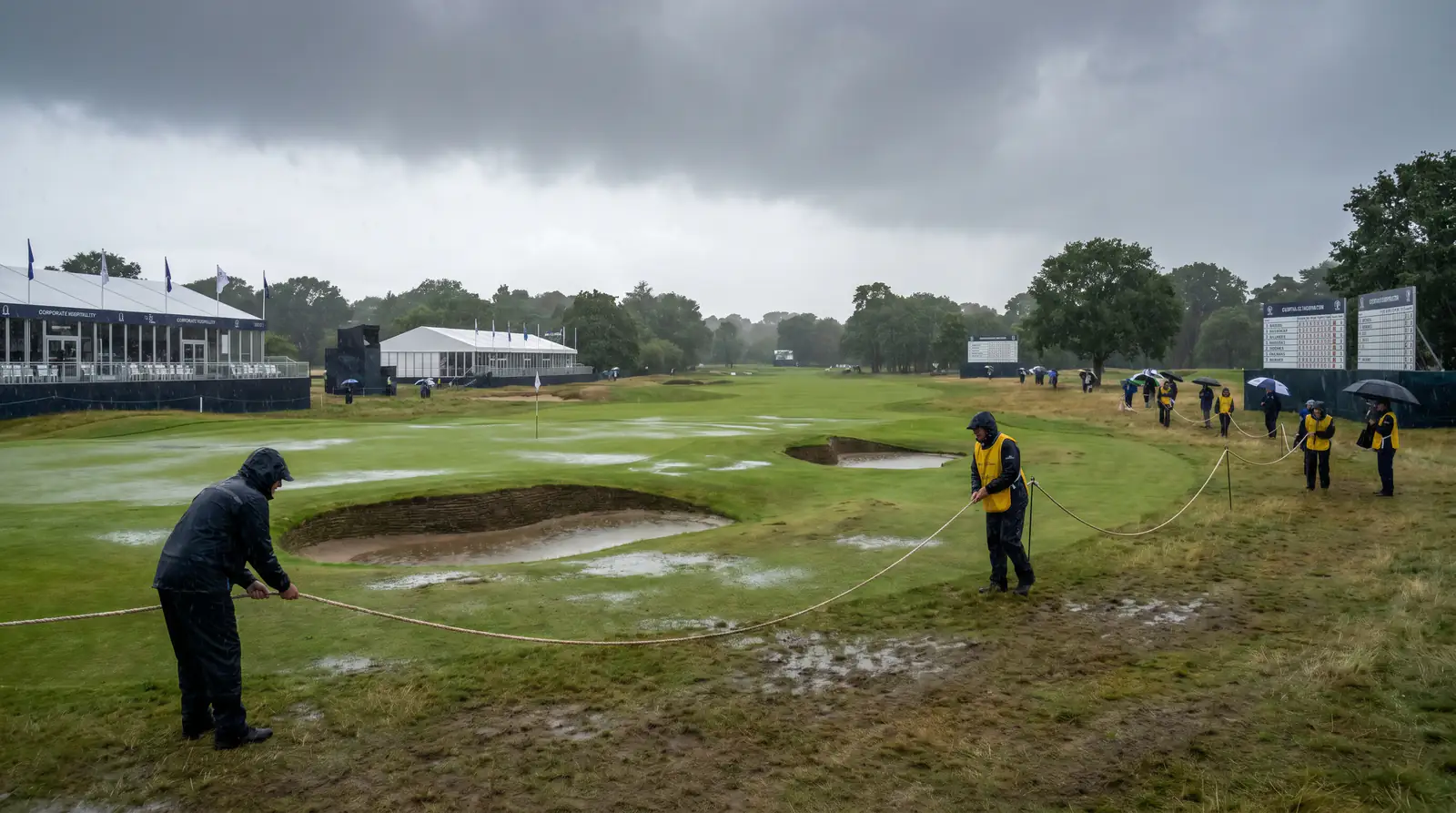
The specific situations to watch for. Rain in the morning that softens greens for the morning wave but stops before the afternoon — the morning wave gets receptive greens; the afternoon plays on quicker, faster-running surfaces. Frost delays that compress the round and bring the afternoon wave back into normal scoring conditions — neutralises the wave split entirely. Wind direction shifts that punish the morning at a links course — overturns the standard “back the morning wave” instinct. None of these are visible from the bookmaker’s headline odds. All of them are visible from a careful read of the forecast and the tee sheet together. The deeper mechanics of how weather inputs feed into all golf markets, not just FRL, are unpacked in my piece on weather impact across golf betting odds.

Stake Sizing in a Variance Market
The bankroll rule I follow on FRL is the strictest I apply anywhere in golf. 0.25 to 0.5 per cent of bankroll per ticket. Not per Thursday — per ticket. The reason is mathematical. The strike rate on FRL backing, even with serious tee-time analysis and good forecast reads, hovers around 1.5 to 3 per cent across a season. The variance budget required to survive that strike rate without ruin is enormous. Most casual punters size FRL tickets the same way they size top-twenty tickets, which is where the market quietly destroys recreational bankrolls.
Concrete number for a £2000 bankroll — £5 to £10 per FRL ticket, maximum. Three tickets at a Major Thursday is your week’s exposure. Resist the urge to spread small money across ten or twelve plays; the variance budget breaks down at scale and the operator’s expected value on combined tickets tilts further against you. Discipline here is the difference between a market that supplements your season and a market that ends it.

FRL Each-Way as the Underrated Play
Some UK operators offer each-way on FRL with five places paid at 1/5. Not all do — it’s an operator-specific feature and worth checking before you commit. When it’s available, FRL each-way on a longshot in the 80/1-plus band is often the highest-EV single ticket you can construct on Thursday morning.
The arithmetic. A 100/1 FRL each-way with five places paid at 1/5 pays place at 20/1 — your place leg returns £210 on a £10 each-way outlay if your player finishes inside the top five at the end of round one. The probability that any given 100/1 player finishes top-five on day one across a season is, in practice, somewhere in the 4 to 5 per cent range based on the recency-weighted simulation work that public modelling tools produce. The realised EV on that ticket lands meaningfully positive on a season-long basis, and FRL each-way is the part of the FRL market most often overlooked because the win-only banner odds are the loud number.

Pair this with the morning-wave bias and the EV picture sharpens further. A 100/1 player in the morning wave at a windy Major has a top-five round one probability that climbs into the 7 to 9 per cent band, which is where the realised EV crosses comfortably into positive territory at standard place terms.
The Five Traps That Empty Thursday Bankrolls
Trap one — backing the hot putter. Putting performance week to week is statistically close to indistinguishable from noise; a player who putted brilliantly last Thursday at a completely different venue tells you almost nothing about Thursday this week. Skip the “his putter’s hot” tip.
Trap two — overweighting world-ranking. The top-ten OWGR players occupy a small portion of the field — typically five to seven of 156 — and their R1 scoring distribution is meaningfully tighter than the field’s. They lead the tournament more often than the field, but they lead Round One specifically about as often as a randomly selected mid-tier player. R1 leadership is not a top-ranked-player market; it’s a variance market.
Trap three — backing a superstar at a new course. Course fit is a real thing, but it accumulates over rounds three and four, not over round one. Round one is too small a sample to read course-fit signal cleanly.
Trap four — ignoring the tee-time and wave entirely. The single most predictive variable in FRL is whether the player tees off morning or afternoon, weighted by the forecast for the wave that follows. Punters who skip this step are paying full retail for a market with structural edges sitting on the surface.
Trap five — chasing on the Friday. FRL is a Thursday market. Some punters double down on Friday morning to “recover” their FRL loss with a different Friday-only construction. The Friday market is sharper and less forgiving; recover later in the week on outright or top-twenty markets, not on day-two FRL bets that turn the leaderboard into a tilt-driven slate.
Why are first round leader odds so long?
A 156-player field combined with the low correlation between world ranking and single-round scoring means even top-twenty world-ranked players price in the 25/1 to 40/1 range for FRL. The market is structurally a variance market — short prices would imply impossible certainty about a one-round result in a deep field.
Can I cash out on a first round leader bet mid-round?
Yes, with most major UK operators, provided the market remains open. Live cash-out pricing on FRL is thin because in-play liquidity on a single-round market is limited, so the operator’s margin on the cash-out quote tends to be wider than on outrights or top-finish markets.
Prepared by the Golf bet editorial staff.