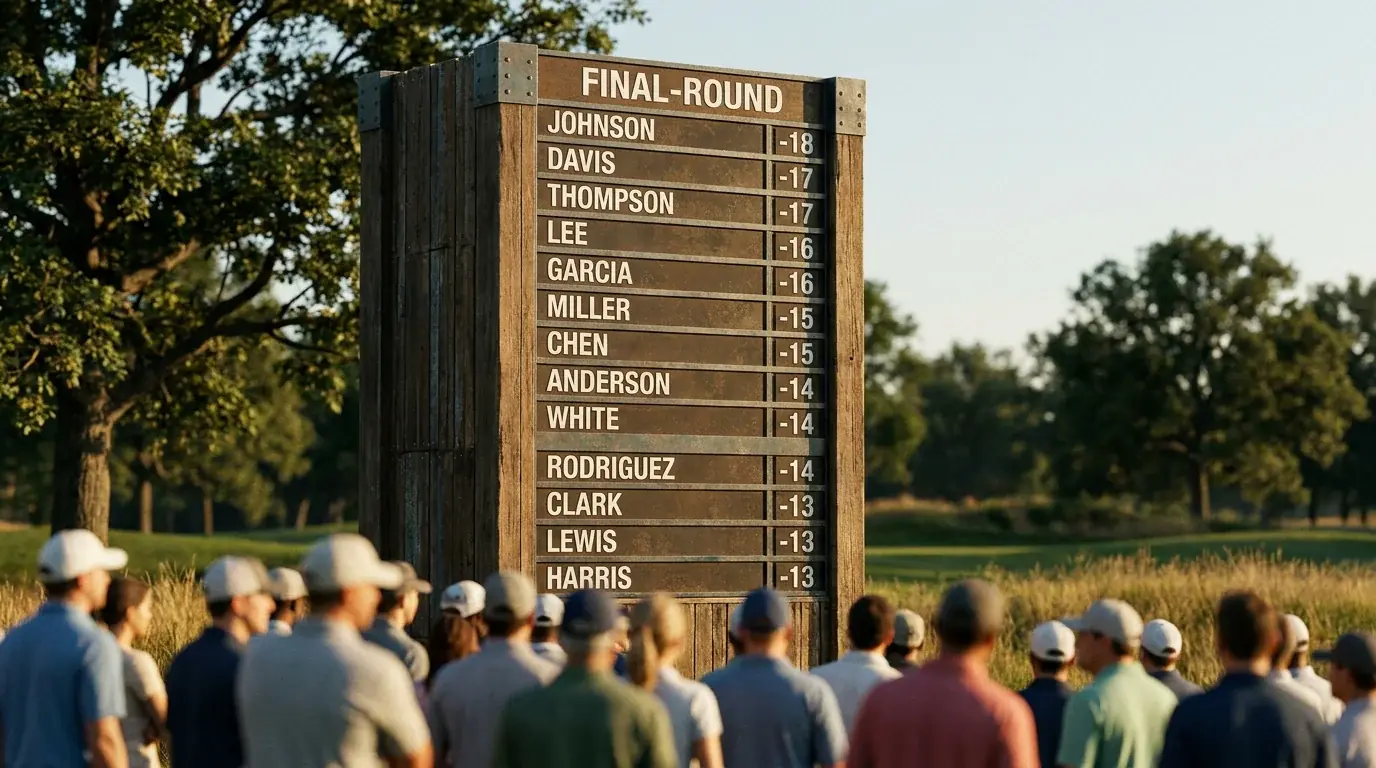
Weather Impact on Golf Betting Odds: The Tee-Time and Wave Edge
 Available in US
The single best week of betting I’ve ever had was the 2019 Open at Royal Portrush, and it had nothing to do with my picks. The forecast on Wednesday evening pointed to a sharp morning-to-afternoon wind shift on Thursday, and the first-round leader market hadn’t fully priced it. I backed three afternoon-wave players at 50/1, 80/1 and 125/1, and one of them landed. Without the weather work I’d have bet the same names but I’d have stuck with the morning-wave equivalents at much shorter prices. That week is the reason this piece exists.
Table of Contents
- Why weather drives more golf-betting value than anything else
- Morning versus afternoon wave dynamics
- Wind direction and the course-specific complication
- Rain, soft conditions and the bombers’ edge
- Play suspensions and settlement rules
- Forecast sources and how to read them
- Weather and the live in-play market
- Why weather work is the highest-return preparation
Why weather drives more golf-betting value than anything else
A reader once asked me which single factor I’d keep if I had to throw everything else out of my modelling. The answer was easy: tee-time wave and wind forecast. Weather is the only factor that can move a player’s expected score by two or three shots in a single round, and that’s enough to flip a top-10 finish into a missed cut or vice versa.
The Open Championship is the headline example because the 156-player field, split into morning and afternoon waves across 65 percent exemptions and 46 qualifiers, magnifies wave-driven scoring gaps. The DataGolf simulation engine runs roughly 60,000 simulations per pre-tournament prediction, with a 2-standard-deviation error of about 0.4 percent on a 50 percent probability — but those simulations assume average weather. Real weather forecasts produce scoring distributions that no pre-tournament model can fully bake in.
UK firms have improved at incorporating weather into their pricing since around 2018, but the speed of forecast updates still outruns the speed of book updates. The window of opportunity sits between when a sharp forecast emerges and when the trading desk processes the implications across all linked markets. That window is typically 8 to 18 hours, sometimes longer.
Morning versus afternoon wave dynamics
Tee times split the field into two waves on Thursday and Friday — typically half the field tees off in the morning, the other half in the afternoon. The two waves swap on Friday, so a Thursday-morning player becomes a Friday-afternoon player, and vice versa. That’s a structural feature of every 156-player event including all four Majors.
The wave dynamics matter when the weather differs across the day. A morning wind that drops at noon, an afternoon rainstorm that softens the greens, an afternoon temperature drop that firms up putting surfaces — all create scoring gaps that the pre-tournament outright market hasn’t fully priced. The first-round leader market is where these gaps show up most cleanly, and I’ve written about that specific market in my piece on first round leader strategy.

The pattern I look for is asymmetric weather: a forecast where one wave faces materially harder conditions than the other on the same day. Symmetric weather — both waves face wind, both waves face rain — doesn’t create the same betting edge because the field-level scoring shifts together. The asymmetric forecasts are where the value lives.
Wind direction and the course-specific complication
Wind speed is only half the story. Wind direction matters because every golf course has a routing that interacts with the wind direction in specific ways. A 15-mph wind from the south-west at St Andrews makes the first nine play short and the second nine play long. A 15-mph wind from the north-east does the opposite. The same wind speed produces dramatically different scoring distributions depending on direction.
Course-specific wind work is where serious links betting separates from casual links betting. I keep a wind-direction notes file for every coastal course I bet on regularly. The file tracks how each direction affects scoring relative to average, broken down by which holes get harder and which get easier. That’s tedious but valuable work — UK firms don’t price wind direction granularly, they price wind speed, and the difference is where the edges sit.
At parkland courses the wind direction matters less because the routings are usually more sheltered and the holes interact with wind less dramatically. But at any course with significant elevation change or with greens elevated above approach areas, wind direction can flip whole holes from birdie opportunities to par-or-worse propositions.
Rain, soft conditions and the bombers’ edge
Rain creates the most predictable betting pattern in golf: softer greens and softer fairways favour the bombers. Soft fairways don’t run out as far, so distance off the tee matters less on the run-out, but it matters more on the carry — players who can fly the ball 290 yards in the air keep their advantage when conditions limit roll for everyone. Soft greens take the spin penalty off aggressive approach play, allowing the bombers to attack pins they’d normally have to play safe.
The betting implication is to upweight strokes-gained off-the-tee in any forecast that points to rain. The market’s general response to rain forecasts is to shorten the favourites’ prices and lengthen the longshots, but the shift often under-corrects for how much soft conditions favour the elite ball-strikers. The 25/1-to-50/1 band sees the biggest pricing distortions in soft-week forecasts.

Rain also produces play-suspension risk, which affects settlement rules — that’s a separate consideration covered later in this piece. The pricing implication is to be aware that rain forecasts can produce both scoring shifts and settlement quirks within the same week.
Play suspensions and settlement rules
I had a friend bet a sizeable each-way on a player who was leading at the 70-hole mark when an evening storm wiped out the final play of the day. The tournament was shortened to 54 holes, his player was still leading, and his bet settled as a win. He’d never thought about settlement rules until that point. Most punters don’t.
UK firms generally follow the same settlement rules for shortened tournaments: a tournament shortened to 54 or 36 holes still settles all bets based on the official final result. A tournament shortened below 36 holes typically results in voided bets, though the specific threshold varies by bookmaker. The Open Championship has had at least one shortened edition in living memory and the Masters has had multiple weather-shortened rounds — these are not theoretical scenarios.

The practical implication is that bets placed in rain-affected weeks carry a different risk profile than bets placed in clean-weather weeks. I’ll generally stake smaller in forecast-uncertain weeks, partly because the scoring shifts are harder to predict and partly because the settlement risk adds a layer of variance that doesn’t reward calculated betting.
Forecast sources and how to read them
The forecasts UK firms use are not the forecasts the betting public sees. Trading desks subscribe to professional meteorological services that update more frequently and at higher granularity than the public forecasts available on weather apps or news sites. The public forecasts are usually correct on the broad strokes but lag the professional sources on timing, direction shifts, and rapid changes.
My own forecast workflow is to check three independent sources at least 48 hours before tee-off, then again at 24 hours, then again at 6 hours. The pattern I look for is convergence — when all three sources agree on a sharp wave-driven shift, the confidence is high. When sources diverge, the forecast carries genuine uncertainty and I’ll hold off on weather-driven positions until closer to tee-off.

The most valuable single piece of forecast data is the wind-shift timing on Thursday and Friday. If two sources agree that the wind will drop at 11am, that’s actionable. If three sources agree, that’s high-confidence actionable. The morning-versus-afternoon wave bet for the round depends almost entirely on getting the wind-shift timing right.
Weather and the live in-play market
Live in-play markets respond to weather faster than pre-tournament markets, but they still lag the actual conditions. The UK posted around 290 million online real-event bets per month in 2025, and a meaningful share of that volume runs through live in-play during weather-affected events. The traders price the visible conditions but they don’t always price the next two hours of conditions accurately.
If a storm cell is approaching the course on the radar and the leaderboard shows three players on the back nine who’ll finish before the storm hits, I’ll often back those players’ top-10 prices in live in-play. The traders price based on current play; the storm’s arrival will compress the leaderboard by halting later groups, which benefits the finishers. Small edge, repeatable pattern.
The flip side is play suspensions: a 90-minute storm delay can compress in-play prices severely once play resumes, especially if the suspension shortens the round. I’ll typically reduce live in-play stake sizes during weather-uncertain stretches because the price movement after suspensions is sharp and not always predictable.
Why weather work is the highest-return preparation
If I could give a UK punter only one piece of advice for improving their golf betting, it would be: subscribe to professional weather data or check at least three forecast sources, and learn to read wind-shift timing accurately. Course-fit work pays slowly. Strokes-gained work pays slowly. Weather work pays sharply during the weeks when forecasts diverge from the market’s pricing, and those weeks come around often enough across a season to produce a meaningfully better record than weather-blind betting. The 2019 Open at Royal Portrush taught me that — and I’ve not bet a Major weekend without checking the wave forecast since.
UK firms generally settle all bets based on the official tournament result if play reaches at least 36 holes. A tournament shortened to 54 holes still pays out outright winners, each-way places and most prop markets according to the final leaderboard. Below 36 holes most bookmakers void affected bets, though specific thresholds and rules vary by firm — check the individual terms before placing weather-week stakes. TGL is played indoors on simulators, so real-world weather has no effect on play or scoring. The two-hour broadcast window runs in climate-controlled venues with consistent conditions every match. Weather analysis adds no betting value for TGL — that product is driven by team chemistry, format dynamics and the hammer challenge, not by outdoor conditions.How do 54-hole settlement rules work for weather-shortened tournaments?
Does weather affect TGL betting markets?
Created by the ”Golf bet” editorial team.