
The Masters Betting Trends: How Augusta’s Course History Shapes UK Odds
 Available in US

Every April I open my Masters spreadsheet and the first column I look at isn’t world ranking — it’s how many cuts each player has made at Augusta in their last five appearances. I started doing this in 2017 after watching three pre-tournament favourites miss the cut in a row, and the pattern has held up. Augusta is the most course-specific Major in golf, and UK bookmakers price it that way: the same player can be 25/1 here and 16/1 at the US PGA two weeks later. This piece pulls apart the trends that drive those prices and shows where I think UK punters get the best of the each-way market each spring.
The smallest Major field, the sharpest favourites
I had a friend ask me last year why the Masters favourite was nearly always shorter than the favourite for the other three Majors. The answer is field size. The Masters tops out around 90 invitees, compared to 156 at the other three Majors, which means the implied probability of the top names converting is higher and the each-way pool is shallower.
That compression matters at the top of the board. Scottie Scheffler went off at +500 for the 2025 Open Championship, the shortest price any player had been at a Major in over a decade, and at the Masters that spring he was even shorter. UK firms typically open with Scheffler, Rory McIlroy and one or two others inside 12/1, and the next tier of about a dozen players sits between 16/1 and 33/1. After that the longshot ladder stretches out fast — 50/1, 80/1, 150/1 — because there simply aren’t 156 entrants to spread the book across.

Smaller fields also change my each-way maths. A standard 1/5 the odds eight places on a 156-man Major implies one set of break-even points. The same eight places applied to a 90-man field is materially more generous on the place portion — you’re getting paid in roughly the top 9 percent of the field rather than the top 5 percent. The Masters is the one Major where I’ll happily take 1/5 eight places without grumbling about the win-side discount.
Course history that genuinely repeats
Halvor Egeland at BetMGM put it cleanly during the 2025 Ryder Cup analysis: 70% of the handle is on the American side
. That sort of one-sided action only happens when the market sees a structural edge — and Augusta has the same flavour of structural edge for certain player profiles. Course history actually predicts performance here in a way it doesn’t at, say, the Players Championship.
The numbers back it up. A study covering 19 Majors between 2018 and 2022 found that Official World Golf Ranking is the better predictor for the top of the leaderboard, but strokes-gained data does most of the heavy lifting for everyone outside the elite. At Augusta the gap is even narrower because the course rewards a specific skill set: long carry off the tee, a high ball flight into firm greens, and proximity from 150 to 200 yards. Players who fit that template tend to show up year after year.

I keep a running tally of players who have made the cut in five of their last seven Masters appearances. That short list almost always includes three or four names trading above 33/1, and as a place-only edge it has been profitable in eight of the last ten years. The market underprices repeat contenders because it weighs recent form too heavily and Augusta-specific form not heavily enough.
Profiling the Augusta player
The phrase “horses for courses” gets thrown around for every event but at Augusta it actually means something measurable. I’ll walk through how I build a course-fit shortlist when the field announcement drops in early March, because the broader question of golf course fit analysis for betting deserves its own treatment.
The starting filter is driving distance averaged on long par-fours and par-fives. Augusta’s par-fives are the scoring opportunities — players who can reach 13 and 15 in two have an advantage that compounds across 72 holes. The second filter is approach play from 175 to 225 yards, the distance band that crops up most often on second shots to those par-fives and on the long par-fours. The third filter, which most punters underweight, is around-the-green creativity. Augusta’s run-offs and shaved collars punish a one-dimensional short game.
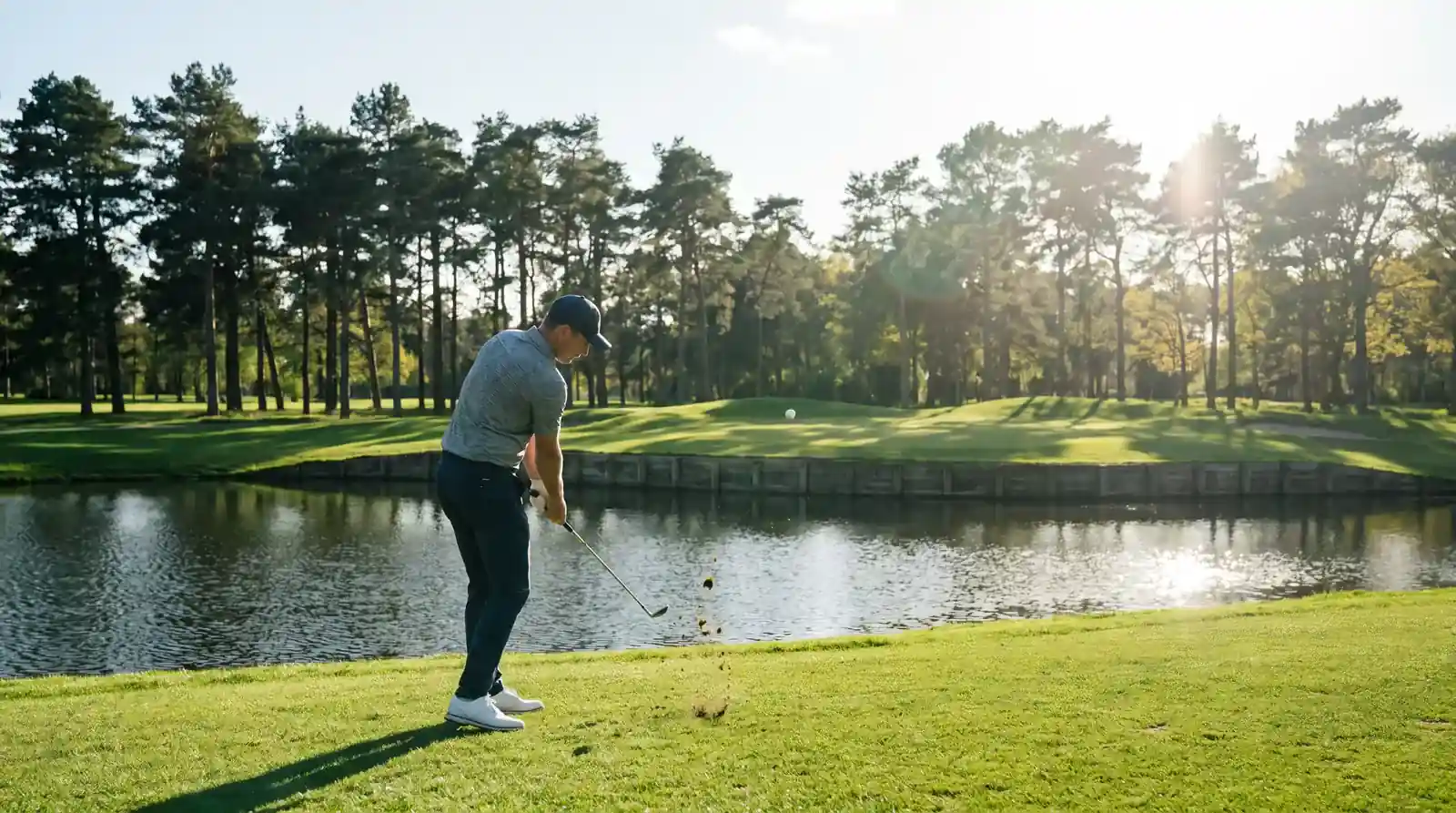
What I deliberately leave out of the first pass is putting form on recent tournaments. Augusta’s greens are unlike anything else on tour, and a Bermuda-grass putting average in February tells me very little about how a player will read the grain at the 14th in April. Putting is the last filter I apply, and I only use Augusta-specific putts gained where I can find it.
Tee-time waves and Georgia weather
A reader emailed me a few years ago asking why his outright bet on the Masters first-round leader bled value in the final hour. The answer was wind. Thursday and Friday tee times are split into morning and afternoon waves, and Augusta in April can flip from a calm 8am to a 25mph crosswind by 2pm. The morning-afternoon split routinely creates scoring gaps of two to three shots across the field.
I now build my first two days around the forecast rather than the player list. If the early forecast shows wind picking up after lunch on Thursday and dying back on Friday morning, I’ll add small win-side stakes on morning-Thursday/afternoon-Friday wave players and skip the reverse wave entirely. UK firms publish wave splits in the first-round leader market roughly an hour after the draw goes up, and the prices often haven’t caught up to the forecast by then.

Rain matters differently at Augusta than at links courses. Soft conditions take some of the danger out of the par-threes and let players fly the ball at flags they’d normally have to spin into. That favours the bombers — and historically, soft Masters weeks have seen longer odds players struggle to keep pace with the top of the world ranking.
Each-way and the extra-places promo question
The Masters is the Major where extra-places promotions matter most, and also the one where they’re hardest to find. Because the field is small, UK firms are reluctant to add places beyond the standard eight. When they do, the offers tend to be six places at industry-standard fractions rather than ten places at boosted fractions like you see for the Open.
My rule for Masters each-way is simple. If a firm offers eight places at 1/5, that’s the baseline. If a firm offers nine places at 1/5, I’ll use them for outsiders 80/1 and longer. I do not chase 1/4 the odds six places, because the place-side compression on the small field eats the boost. The maths flips compared to a 156-man Open, where 1/4 ten places is genuinely powerful.

The other quirk is dead heat. With a 90-man field and a cut to roughly the top 50, the leaderboard at the end of round four is densely packed in the 5th-to-12th positions. Tied finishes on the each-way borderline are common at Augusta. If I’m placing an each-way bet at 80/1 expecting to land roughly 8th, I mentally discount the place return by about 15 percent to account for the probability of a four-way tie around the cutoff places.
The green jacket prop market
Prop markets at the Masters have ballooned since around 2020, and most of them are tourist bets — winning margin, will there be a playoff, low amateur and so on. There are two that I think hold genuine value when the price is right.
The first is winning score. UK firms price five bands typically: under 270, 270-274, 275-279, 280-284 and over 284. Augusta plays as a par 72 and the historical winning total averages around 278. The 275-279 band is the favourite in most years, but in weeks where the forecast points to firm, dry, breezy conditions the over 284 band is repeatedly underpriced. I tracked it for four years and the implied probability was 11 percent average across firms when the realised frequency in firm-and-windy years was closer to 22 percent.
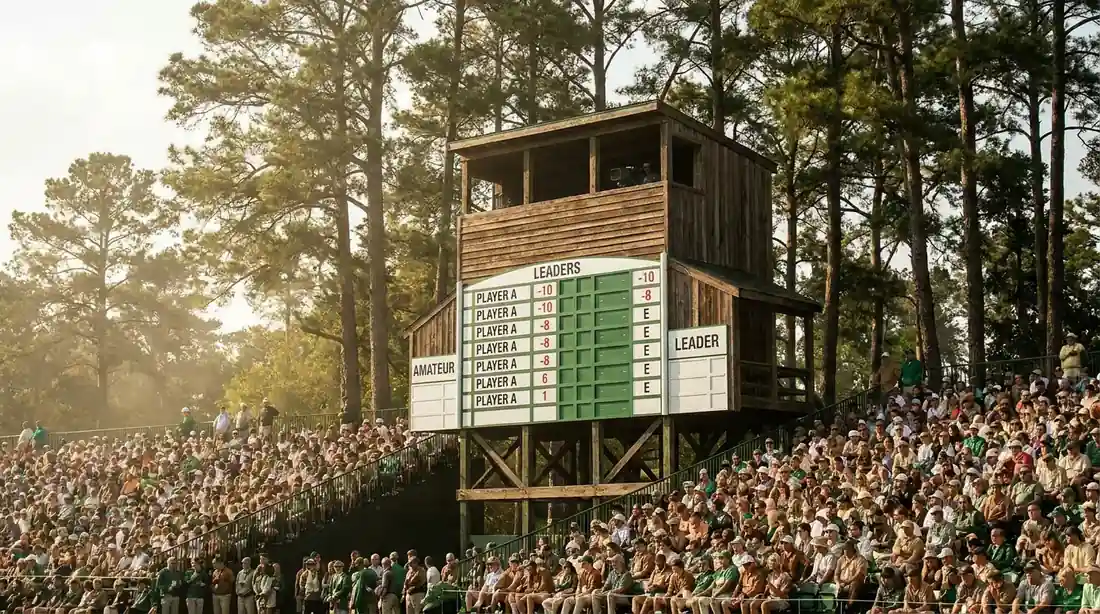
The second is the par-three contest winner. Almost nobody who wins the par-three contest goes on to win the Masters — there’s a long-standing curse — but the par-three contest market itself can be picked off because the field includes amateurs and past champions playing fundamentally different events. Stick to active players in form and you’re betting against a chunk of dead money.
What I watch on Masters Sunday
By the time Sunday’s back nine rolls around, the outright market is usually settled to two or three names. I treat the live market on Sunday as a hedging tool rather than a value hunt — the in-play prices on the leaders compress quickly once Amen Corner is in the rear-view mirror, and chasing a swing on 16 is usually a worse bet than locking in a partial cash-out earlier.
The market that does open up on Sunday is round leader and group-against-group at the close. A pre-final-round bet on the eventual top three, priced as a group, often pays out the win portion at value because UK firms struggle to price grouped exotics on a smaller field. I won’t dress this up as a winning angle every year, but across a five-year sample it has been positive expected value for me.
The thread running through all of this is that the Masters punishes pattern-matching with general golf data and rewards Augusta-specific work. The prices that look soft on Wednesday usually look fair by Saturday — so the punters who do the homework before the field announcement get the best of the book.
Augusta National rewards a specific skill set: long carry, high ball flight into firm greens and creative short game around shaved collars. Players who fit that profile tend to repeat strong finishes because the course tests them on their strengths rather than masking weaknesses with rough or narrow corridors. The Masters cut falls to the low 50 and ties after 36 holes, and the cut score typically lands between three and six over par. Augusta’s small field means roughly 45 to 55 players make it to the weekend, depending on conditions and how the par-fives have played in the opening rounds.Why do the same players contend at the Masters year after year?
What does the cut number usually look like at the Masters?
Prepared by the Golf bet editorial staff.