The Open Championship Betting Playbook for UK Punters
 Available in US
I grew up watching The Open with my grandfather. The first one I bet on properly was Royal Birkdale in 2008 — a tenner each-way on Greg Norman at 75/1, which paid for the train ride home. Almost twenty years and dozens of Opens later, this is still the Major I devote the most pre-tournament time to. It’s also the one where UK punters get the most generous treatment: deeper place terms, more extra-place promotions, and a market that genuinely respects the unique demands of links golf. This piece is the playbook I follow each July, from the moment the qualifying series finishes to the closing flag on Sunday.
Table of Contents
A 156-player field with built-in longshots
A reader once asked me whether the Open’s huge field was actually punter-friendly or just confusing. The honest answer is both. The Open Championship runs a 156-player field, of which 65 percent — about 100 players — enter through 28 different exemption categories, with another 46 coming through Open Qualifying Series events around the world. That structure is unique among the Majors.
What it means in practical terms is that the back half of the field is genuinely random. You’ll see a 50-year-old past champion, an amateur from Japan, a Korn Ferry Tour journeyman and a European Tour stalwart all teeing it up in the same event. The win odds on those players are often 1000/1, but the place market — particularly with extra places — is where the value pools up.
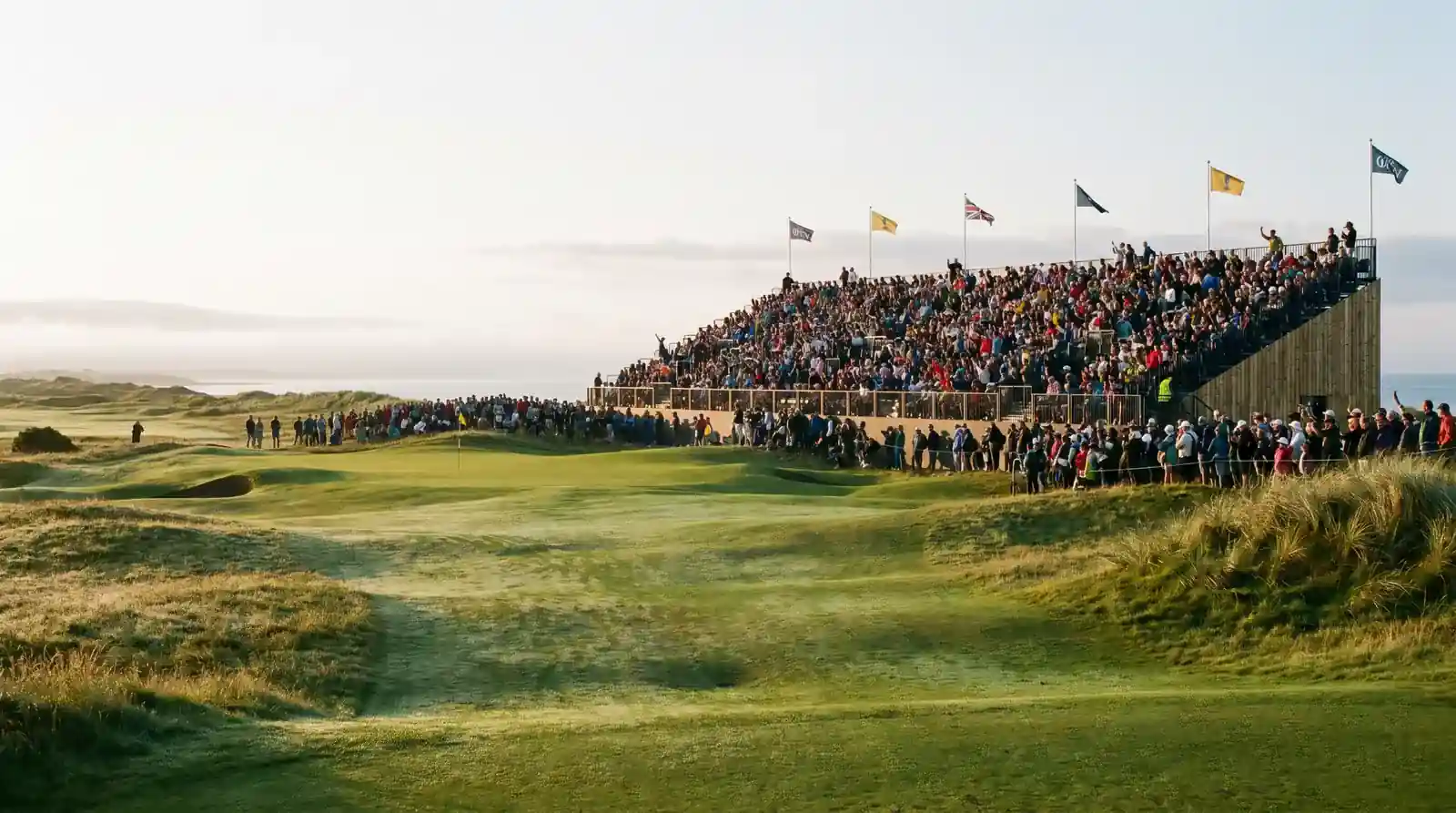
The qualifying series creates one of the few situations in Major championship betting where a player can arrive in the field with hot recent form that the outright market hasn’t fully digested. A player who won a regional final two weeks before the Open shows up at 500/1 by default, but if he played at one of the host-region tracks and showed strong wind play, that price is too long.
Links golf and the wave that won’t go away
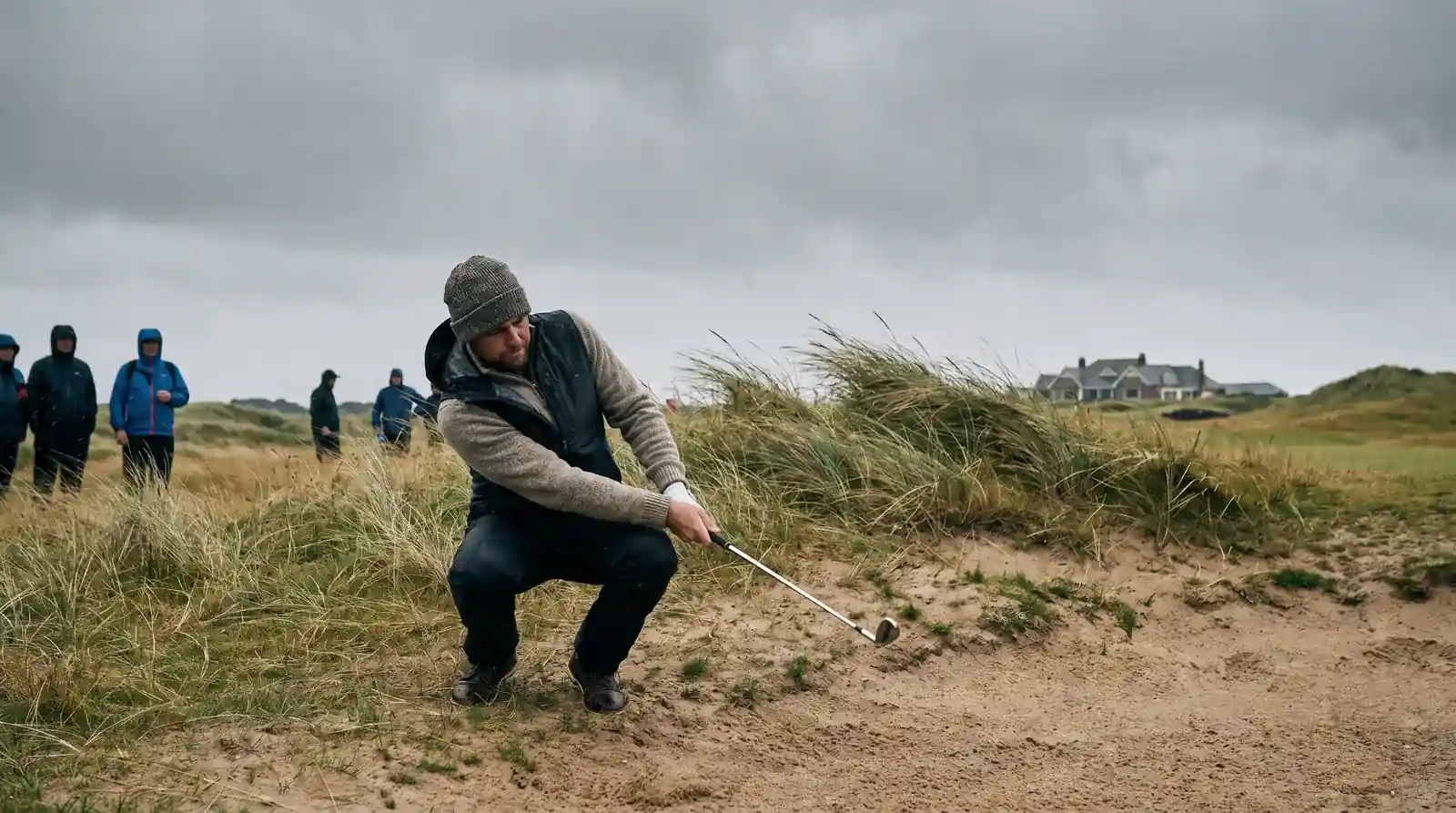
Standing on the 12th at Royal Liverpool one Friday morning a few years back, I watched a 20-mph crosswind drop to nothing in the space of three groups. The afternoon wave got the calm half of that swing. By Friday evening, that wave had scored on average 2.8 shots better than the morning. Tee-time waves are the single biggest variable I work into Open betting.
The links-and-wind story compounds it. Coastal courses with firm fairways, gorse, pot bunkers and unpredictable bounces reward a different player profile than the parkland weeks that fill most of the PGA Tour calendar. Trajectory control matters more than raw power. The bookmaker who consistently markets the Open as a positive result for the house framed it accurately: when the wind blows, the leaderboard scrambles, and punters who backed mid-priced ball-strikers tend to land more places than the headline favourites.

The qualifying-series players I mentioned earlier slot into this picture too. A player who came through a qualifier at a coastal English track has just played links golf in tournament conditions. A player who came through a US qualifier hasn’t. That single distinction is worth a place or two of edge before the first ball is struck.
Morning waves, afternoon waves, and the live market
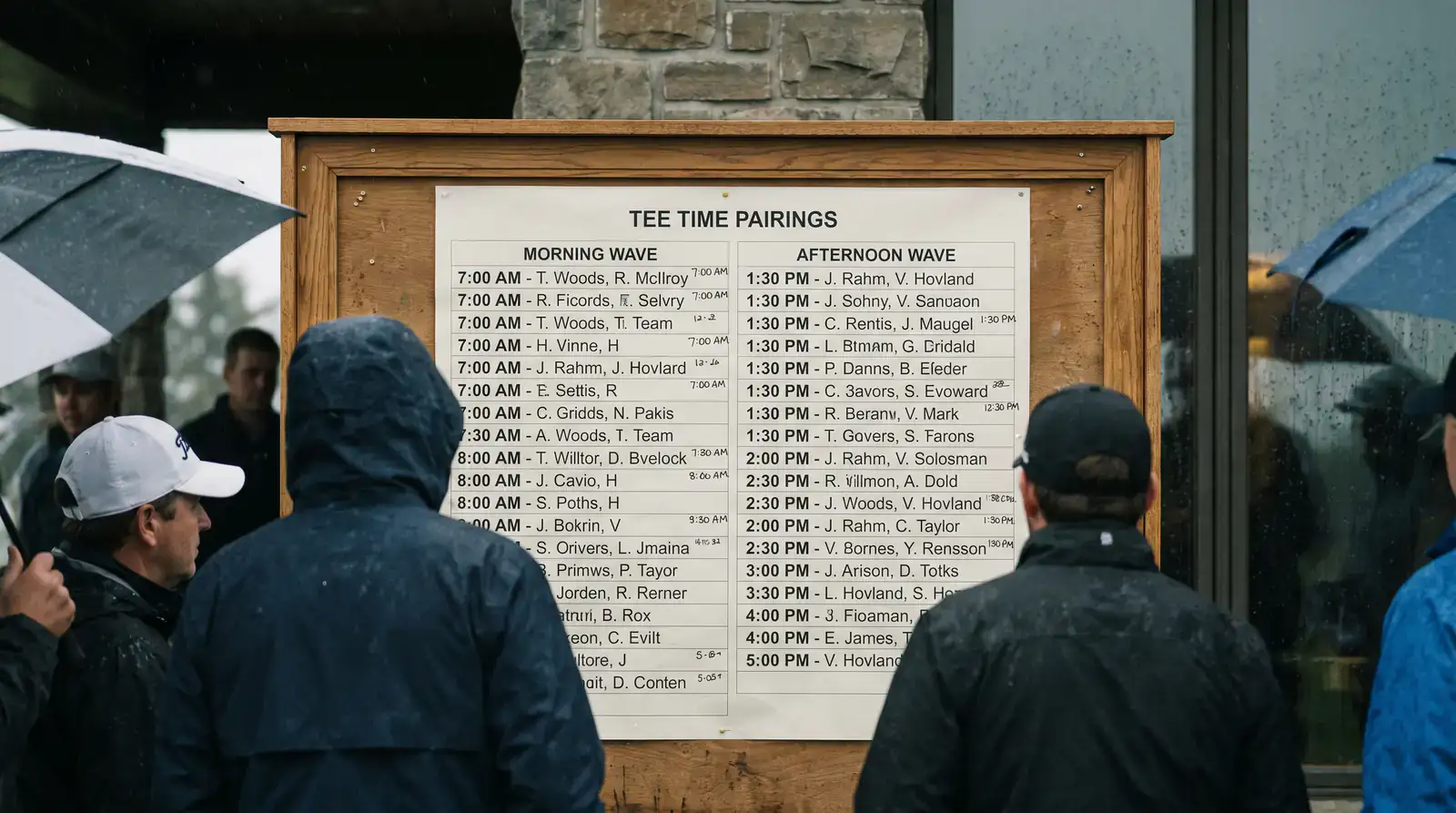
Wave splits are the most actionable single insight for Open betting. I treat them with the same discipline I apply elsewhere — the broader logic of weather impact on golf betting odds sits behind everything I do for this event.
The thing to remember about UK firms is that they post the wave splits before the wave forecast is fully baked into the prices. There’s a window — usually from late Wednesday afternoon until Thursday tee-off — when the first-round leader market and the make-the-cut market both lag the forecast. I’ve found two pricing patterns repeat. First, in years with a heavy morning-Thursday wind expected to drop, the morning wave’s first-round-leader prices stay too short. Second, in years with a heavy afternoon-Friday wind expected to drop overnight, the make-the-cut market underweights afternoon-Friday players who are likely to play their second round in calmer wind.
I’m not chasing margins of pennies here. The pricing inefficiencies on first-round leader and 36-hole leader can be 15 to 25 percent across the field, which is enough to build a small portfolio of three or four wave-favourable plays each Open.
The qualifying-series longshot edge
This is the section I get the most questions on. Open Qualifying Series players sit at long prices by default because the public hasn’t seen their names on TV. Sportsbook traders don’t have detailed strokes-gained data on most of them, so they default to a conservative number. The question is which longshots have a realistic ceiling.
My filter is three deep. First, I want a qualifying-event score that translated to genuine outperformance — not a low number on a soft week, but a strong number relative to the field strength on that day. Second, I want recent prior coastal experience. Third, I look at age and tour status: a 25-year-old Korn Ferry rookie has more upside than a 41-year-old veteran of fifteen Open appearances. Both might be 300/1, but only one has a realistic outright case.
Then I look at the each-way deal. If a firm is offering ten places at 1/5 on the Open, a 300/1 longshot pays 60/1 to land a top-ten finish. That’s meaningful at small stakes. I don’t pretend these bets win often, but the place-strike rate across a sample of 50 such bets has been comfortably positive for me.
Extra places and historical promotions
The Open is the Major where extra-places promos hit hardest. UK gross gambling yield touched £15.6bn in 2025, and a noticeable chunk of that comes from Major championship weeks where firms push aggressive each-way offers. The Open routinely sees firms move from the industry-standard eight places at 1/5 up to ten or twelve places at 1/4. That’s a substantial structural shift in the maths of place hunting.
The discipline I apply is to actually compare the offers, not just take the headline. Twelve places at 1/4 sounds enormous, but if it comes paired with an outright price three points shorter than competitors, the boost evaporates on the win side. The right comparison is total expected return — win portion plus place portion across the full field — at each firm’s pricing.

The Open is also the event where I’m most likely to split a bet across two firms. A win-only stake at the longest available price plus an each-way stake at the deepest place terms beats putting the whole stake on a single book. Bookmakers know this and don’t mind, because the additional handle from extra places promotion pulls in enough new money to fund the boost.
Prop markets that actually price
The Open’s prop market is broader than the other Majors, partly because the field is larger and partly because the format invites quirks. There are two markets I think are systematically softer than they should be.
First, top continental groupings — top European, top Englishman, top Scottish player. These are popular at the casual end of the market and the prices reflect that demand. The best edges sit on top non-American markets when the favourites for the outright are all American; UK firms price these by stripping the American players out of the outright probabilities, which sometimes mispricesthe second-tier European contenders.
Second, the 18-hole match-ups posted for Thursday’s featured groups. The Open’s marquee groupings are stacked — three world top-ten players are routinely paired together, and the two-ball matchup market between them often hasn’t fully digested wave or wind factors. I’ll happily take a +110 dog when the wave favours him.
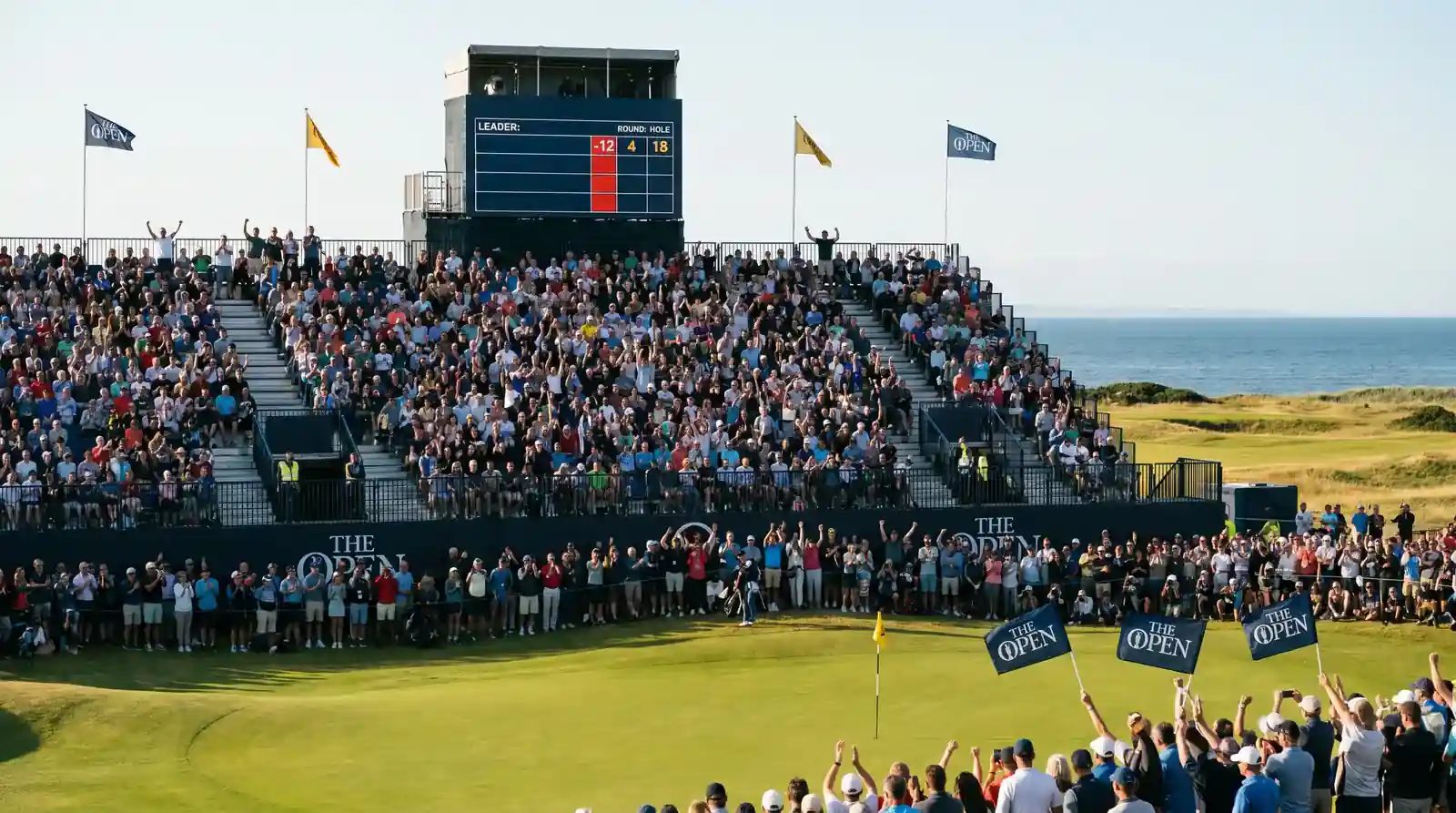
Closing thoughts from the 18th at the home of golf
The Open Championship is the Major where my approach is most distinct from the other three. Field size, wave splits, qualifying-series unknowns, deeper extra-places promotions and links-specific player profiles all combine into a market that rewards homework in a way the other Majors rarely do. The bets I’m proudest of from twenty years of Open betting weren’t the headline outrights — they were the 200/1 place-side strikes on qualifiers who showed up with wave and wind on their side, and the firm shopping that turned standard each-way offers into genuine edge.
None of this is theory. It’s the playbook I work to every July, refined over enough Opens to know which patterns repeat and which were noise. Get the wave call right, get the qualifier shortlist tight, and shop the extra-places offers properly — three habits that have made the Open the most consistent Major on my annual ledger.
The Open’s purse sits broadly in line with the other three Majors, all of which now run between roughly $20m and $25m total. The winner’s share at the Open is around 18 percent of the total, which lines up with the US Open and US PGA. The Masters runs a slightly lower published purse but comparable winner cheque. UK firms typically open the Open outright market in early summer and qualifying-series winners are added to the prices as they secure their spots. Once the full field is confirmed in the week before the Open, all qualifiers are available in every market including outright, each-way, top-Englishman and matchup. Ante-post prices on probable qualifiers do appear at some firms earlier in the season.How does Open Championship prize money compare to the other Majors?
Can I bet on Open Qualifying Series players before they qualify?
Published by the Golf bet team.