
Player Matchup Betting in Golf: Reading the H2H, 2-Ball and 3-Ball Markets
 Available in US
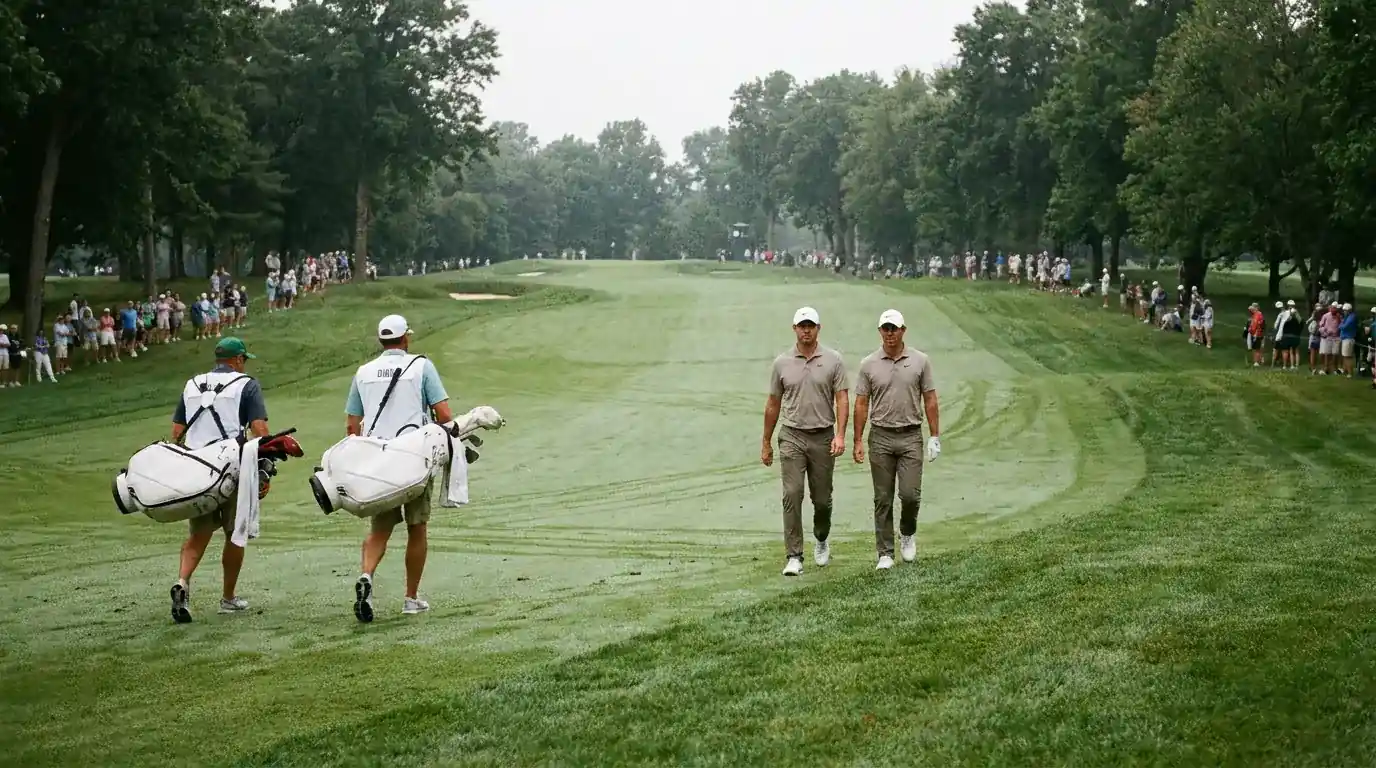
Matchups are the closest thing golf betting offers to football. One round, one comparison, one binary outcome. After years of complaining that golf is too high-variance to bet seriously, more than a few punters I know have quietly pivoted to head-to-head and three-ball markets as their main weekly diet — and their bankrolls have stopped bleeding. Matchups strip out the noise that makes outrights so painful and reduce the bet to a clean question: which of these two or three players scores lower over the next 18 holes? For a UK punter raised on football, that comparison feels intuitive in a way that “pick one of 156” never quite does. It’s also the market where the line between recreational and competitive punter is sharpest, because matchup pricing rewards work and punishes hunches.
Three Market Types, Three Different Questions
A 2-ball is the weekend market — Saturday and Sunday rounds where players are paired by leaderboard position. Your bet wins if your player’s round score beats his playing partner’s. Tied scores are usually settled as void, with stakes refunded; some operators offer a separate “tie” line at long odds. Liquidity is the highest of the three market types because the weekend pairings draw casual money.
A 3-ball is the Thursday and Friday market. Players tee off in threes during round one and round two, and your bet wins if your player has the lowest score in the group at the end of the round. Ties are usually dead-heat-adjusted rather than void — the formula divides your effective stake by the number of players tied at the lowest score. The 3-ball market trades at longer headline odds than the 2-ball because the field of contestants per ticket is larger by one.
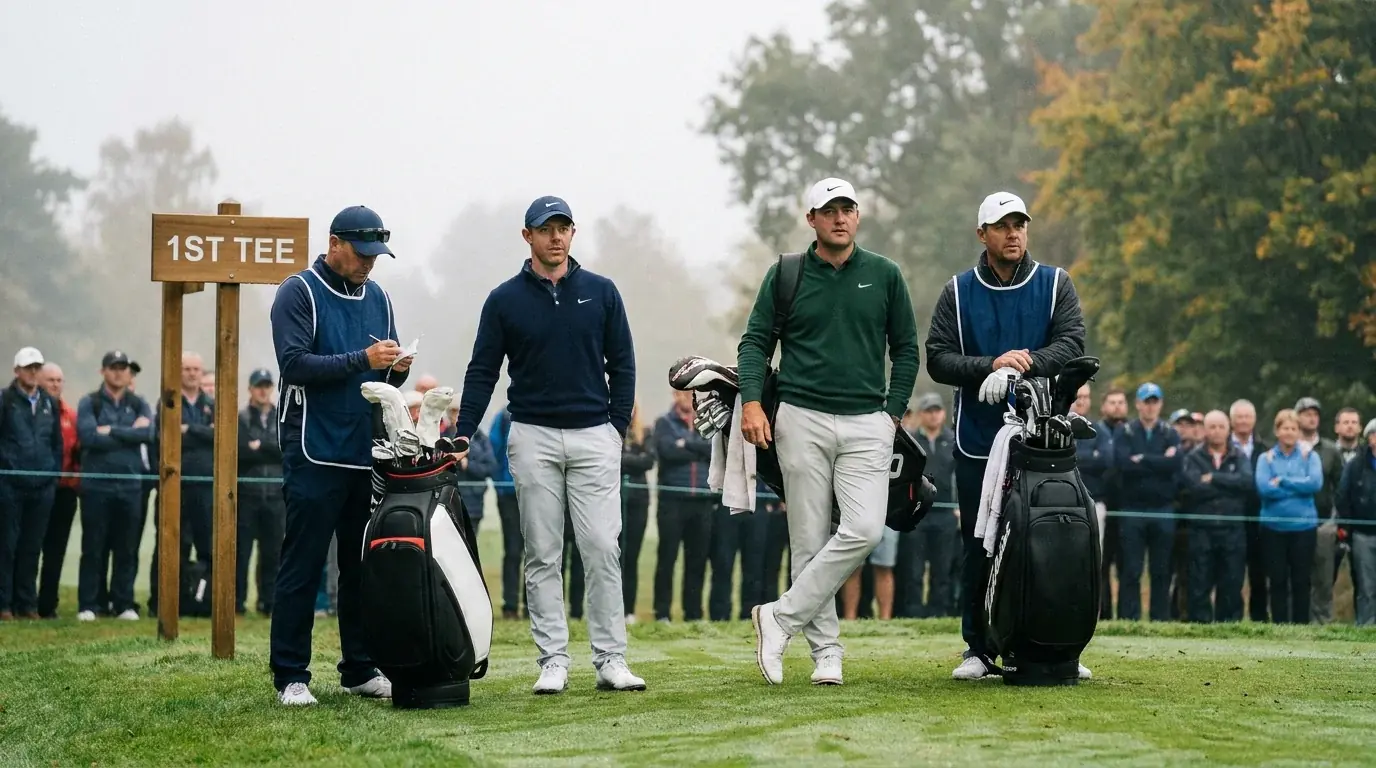
A tournament head-to-head is the third variant and the most undervalued of the three. The bookmaker pairs two players against each other across the full 72 holes; whoever has the lower aggregate score wins. Liquidity is thinner; pricing is sharper but slower to move; the structural edges sit deeper. This is where the meaningful research time pays off, because the field is reduced to one comparison over four rounds and a careful read of recent form, course fit and current week health can be priced in advance of the bookmaker’s adjustments.
The Strokes Gained Read That Reframes the Comparison
Public research on Major championship pricing covering 19 events from 2018 to 2022 produced a finding that’s worth pinning to the desk. For top-ranked players, the OWGR position is the dominant predictor of “to-win” pricing. For lower-ranked players, the dominant predictor is Strokes Gained over the recent weighted form window. The two halves of the field are not priced by the same engine.
The implication for matchups is direct. When a top-twenty OWGR player is paired against a player ranked outside the top-fifty, the bookmaker’s price reflects the ranking gap and very little else. When two players ranked outside the top-fifty are paired against each other — common in 3-balls and increasingly in tournament head-to-heads — the bookmaker’s price is more dependent on recent Strokes Gained data, and that data is meaningfully more available to a careful punter than to the price-setting model running on a thirty-second update cycle.

Where I find the edges. Round-one and round-two 3-balls between three lower-ranked players, with one of them holding a recency-weighted Strokes Gained Approach edge over the other two of 0.3 strokes or more across the last 24 rounds. The bookmaker’s price often holds these tickets at near-even money when the model-implied probability is more like 42 to 47 per cent — a gap of 6 to 12 per cent on a market where you only need a sustained 53 per cent strike rate to clear the juice. The underlying model behind public Strokes Gained pricing, and how its simulations resolve into probability distributions, is covered separately in my walkthrough of the DataGolf model.
How the Wave Shifts the Pairing
The same morning-versus-afternoon weather logic that drives First Round Leader pricing also drives 3-ball pricing on Thursday and Friday — but the bookmaker accounts for it more aggressively in 3-balls than in FRL because the comparison is more confined. A 3-ball where two players tee off in the morning and one in the afternoon (which almost never happens, but does occur when withdrawals shuffle groupings) carries an asymmetric weather exposure that the bookmaker prices, slowly, into the line.
Where the practical edge lives — 3-balls on round two, when the leader rotation flips and players who teed off in the morning of round one now tee off in the afternoon. The forecast change between R1 and R2 isn’t always priced cleanly into R2 3-ball odds for the first hour of the market. Punters who watch the forecast update at 8pm on Thursday for the Friday afternoon wave often find better-than-fair pricing on the first round of R2 3-balls before the bookmaker’s overnight adjustment lands.

Why Matchup Margins Are Tighter Than Outright
The juice on golf matchup markets typically sits in the 4 to 6 per cent range. Compare that to outrights, where the cumulative overround on a 156-player Major field can easily exceed 30 per cent. The reason is liquidity — matchups are the most heavily-traded golf market by volume, and competitive pricing forces operators to keep margins lean to retain action.
The consequence — matchups are the most efficient golf market and therefore the hardest to beat. The structural inefficiency at outright-level pricing, where 30 per cent of the implied probability is the bookmaker’s margin, is replaced by a 4 to 6 per cent margin that requires real edge to overcome. That’s a feature, not a bug. The reason matchups produce reliable income over time is that the markets are competitive enough to support genuine skill, while still leaving enough mispricing in the longer tail (3-balls in particular, tournament H2H specifically) for prepared punters to extract value. The broader UK online betting market grew real-event Gross Gambling Yield to £596 million in the first quarter of 2025, up 5 per cent year on year, and golf matchups are a meaningful share of that growth precisely because they reward the punters who put the work in.

Stake Sizing the Tight-Margin Market
Tighter margins mean tighter stake discipline rather than looser. The intuition that “lower juice means I can risk more” is the wrong way round. Lower juice means the market is harder to beat, so the edge per ticket is smaller, so bankroll variance on a long sequence of tickets is higher relative to the realised edge. The right unit size is the unit size that survives a sequence of 20 consecutive losses, which is the realistic worst-case streak on any matchup volume held above a few hundred tickets per season.
My rule — 1 to 2 per cent of bankroll per matchup ticket when the model edge is 3 per cent or higher. Below 3 per cent edge, skip the ticket entirely. The arithmetic on smaller edges doesn’t survive variance, and the time spent finding those tickets is time better spent on the higher-edge plays. A £2000 bankroll suggests £20 to £40 per matchup, with no more than four or five matchups in play simultaneously over any 48-hour window. That keeps your variance budget contained and your judgement clear for the next price update.

Where Casual Punters Lose Money on Matchups
The biggest single trap — backing the famous name against the grinder. Rory McIlroy versus a tour journeyman in a Sunday 2-ball is the textbook example. The bookmaker’s price reflects the public’s love affair with the brand name, not the underlying probability of who shoots the lower score over 18 holes. The grinder, in matchups, is often the structurally correct play even at near-even money. That asymmetry is most pronounced when the famous player is paired late in the field because his weekend form has been moderate — the public sees the name, the model sees a mid-fifties OWGR profile playing within himself.
The second-biggest trap — backing into 2-balls and 3-balls on the basis of season-long form rather than week-specific course fit. A player who’s been competitive at the last six events but has historically struggled on Bermuda greens is a worse pick at a Bermuda venue than his recent form suggests. Course fit overlays week-specific reads on top of the form picture, and the bookmaker is slow to adjust the matchup line when those two signals diverge.

The third — chasing matchup losses with bigger matchup stakes the next day. The variance on matchups is real even when edges are calibrated, and the right response to a three-loss Friday is the same stake on Saturday, not double. Discipline beats opinion most weeks; that’s a feature of any tight-margin market and matchups are the tightest UK punters routinely access.
Is a 2-ball settled if one player withdraws mid-round?
Most UK operators void the ticket and refund the stake if a player fails to start the round in question. If the withdrawal happens after the player tees off — illness or injury mid-round — settlement varies by operator. Some void; others settle on the score at the point of withdrawal. Read the relevant clause before placing the ticket.
What’s better for value, a 2-ball or a 3-ball matchup?
2-balls are more liquid and more tightly priced. 3-balls trade at longer headline odds and offer more pricing inefficiency in the lower-ranked end of the field. Sharp punters tend to take more action on 3-ball round-two markets where the bookmaker’s overnight adjustment lags the latest forecast update.
Published by the Golf bet team.