Make the Cut Betting in Golf: Why the “Miss” Side Often Holds the Value
 Available in US

Make the Cut looks like the easiest bet on the menu, and that’s exactly why it’s a quiet drain on casual bankrolls. Top-fifty world-ranked players priced at -250 to -400 to play the weekend feel like free money on a Wednesday. They are not. Make the Cut is the most market-efficient mass-traded golf market on the UK landscape, and the side that holds reliable value across a season is the side most punters don’t think to back — the Miss. Nine years of running settlement reports through this market have left me convinced that the structural edges sit on the reverse line, not the favourite line. Anyone betting Make the Cut as a vehicle for safe value is fishing in the wrong pool. The interesting fish are swimming the other way.
What the Cut Rule Actually Says
Most PGA Tour events use a 65-and-ties cut after 36 holes. Top 65 plus anyone tied with the 65th-placed player after Friday’s round plays the weekend; everyone else goes home. The Open Championship uses the same 65-and-ties rule. The US Open uses 60-and-ties, slightly tighter. The US PGA Championship uses 70-and-ties, slightly looser. The Masters uses a unique 50-and-ties construction that produces the smallest weekend field of the four Majors.
LIV Golf events have no cut. The 54-hole format means every player who tees off Thursday morning plays through to Saturday afternoon. That’s a structural feature worth knowing because the Make the Cut market simply doesn’t exist on LIV cards — if your favourite bookmaker is offering one on a LIV event, something is wrong with the line.
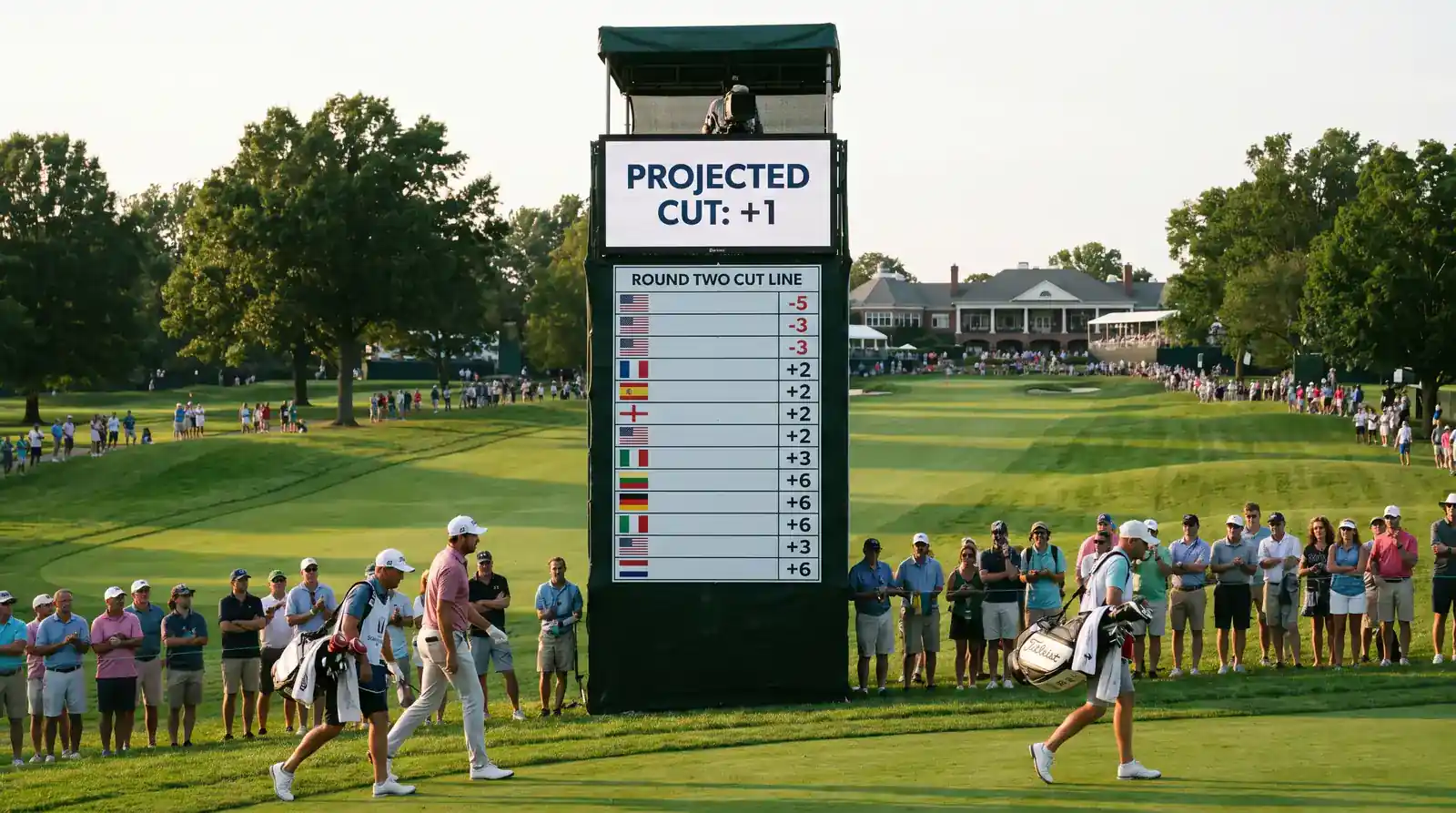
Weather suspensions complicate the picture more than they should. Most operators settle Make the Cut on the official 36-hole result, regardless of how that result is reached. A two-day rain delay that pushes the cut into Saturday morning still settles your Friday Make the Cut ticket on whatever the official cut number ends up being. The settlement clause sits in the bet-types section of the bookmaker’s terms; it’s usually clear once you find it but rarely intuitive at first read.
The Odds Structure That Hides the Real Edge
A standard Top-25 OWGR player tends to price between -250 and -400 to make the cut at a regular tour event. The implied probability of -300 is roughly 75 per cent. The realised probability for a representative top-25 player across a season tends to land between 78 and 82 per cent. So the favourite side carries a small structural edge if you back the right players consistently.
“Small” is doing the heavy lifting in that sentence. At -300 your stake needs to be three units to win one unit, so a 78 per cent strike rate produces a sequence that grinds slowly upward and a single 14 per cent run of variance against you wipes out months of work. The headline edge is real and the realised value over time is meaningfully smaller than the spreadsheet suggests once you account for the bookmaker’s margin and the variance budget required to ride out drawdowns. Even traders with stock-trader mindsets will admit that short-priced favourites in golf are a “positive result” for the operator in many weeks where the public action piles in. Matt Wall at BetMGM made that point pithily during the 2025 Open Championship; a world number one at short outright odds is, in his phrase, “currently a positive result for us” precisely because the public floods the line and the variance still favours the book over the season.

Where the real edge sits — the reverse line. Top-50 OWGR players who’ve been quietly trending downward, who are priced at -120 to -150 to make the cut, and whose recent six-event Strokes Gained data is signalling a missed cut more often than the line implies. The bookmaker’s price reflects ranking and reputation. The realised data reflects current form. When the two diverge by 5 to 8 per cent, the Miss the Cut side at +100 to +120 is the structurally correct play.
Why Backing the Miss Side Works More Often Than You’d Think
The market psychology is simple. Public action piles on the favourite. The bookmaker holds the favourite line slightly long because the public action keeps it long; that’s the wisdom-of-crowds dynamic working in reverse. The Miss the Cut side stays at fair value or slightly better, because it attracts so little action that the operator has no commercial reason to shade it.
The categories of player I keep watch on for Miss the Cut value. Tour rookies in their first US Open, where the USGA setup punishes inexperience and the rookie’s standard tour profile doesn’t transfer. Veterans on links debut, where wind-handling skills haven’t accumulated in their data. Players coming off injury who’ve teed it up before they should have. Players whose recent Strokes Gained Approach has dropped by 0.3 strokes or more across the last 24 rounds — the leading indicator for missed cuts that the public is slowest to price in.

Concrete number from a season’s tracking — backing the Miss the Cut side selectively on these categories has produced a realised strike rate of 53 to 58 per cent at average odds of around +100 across the events I record. The combined yield on volume is meaningfully positive. The favourite side, by contrast, requires a 75-per-cent-plus strike rate to break even, and the cohort that delivers that consistently is small.
Which Strokes Gained Category Predicts the Cut
Strokes Gained as a metric was developed by Mark Broadie at Columbia University in 2011, working from the PGA Tour’s ShotLink data. The four categories — Off-the-Tee, Approach, Around-the-Green and Putting — each measure a different piece of the scoring picture. For Make the Cut prediction, the categories are not equal.
Approach is the strongest predictor across nearly every tour stop I’ve measured. Cut lines are decided by avoidance of blow-up scores, and blow-ups originate in approach play roughly twice as often as they originate in any other category. A player whose recent Approach data has been declining is the canonical Miss the Cut candidate even when his ranking and reputation suggest otherwise.

Off-the-Tee matters at venues where penal rough or tight fairways punish missed drives — the US Open and the rotating-venue Open Championship in some years. Around-the-Green matters at Augusta and on certain links venues. Putting matters least of the four for cut prediction, and given the 2025 research finding that PGA Tour putting variation is statistically close to indistinguishable from noise across a season, weighting putting heavily in your cut model is an active mistake. The fuller picture of how Strokes Gained categories fold into betting models is unpacked in my main piece on Strokes Gained and data-driven golf betting.
How the Cut Number Moves Between Events
Cut lines vary more than casual punters appreciate. The US PGA Championship typically cuts around the 70-and-ties mark with the scoring average around level par or one over. A regular PGA Tour event with a 65-and-ties cut might see the line settle anywhere from -3 to +1 depending on setup. The Open Championship cut on a windy week can drift to +2 or +3; on a calm week it tightens to -2.
Why this matters for betting. A player priced at -200 to make the cut on the assumption of a -2 cut line is a meaningfully better bet if the forecast shifts windy and the cut line drifts to +2. The reverse is true too — short prices on cut markets at calm-forecast Opens are overrated because the cut line tightens and the field bunches.
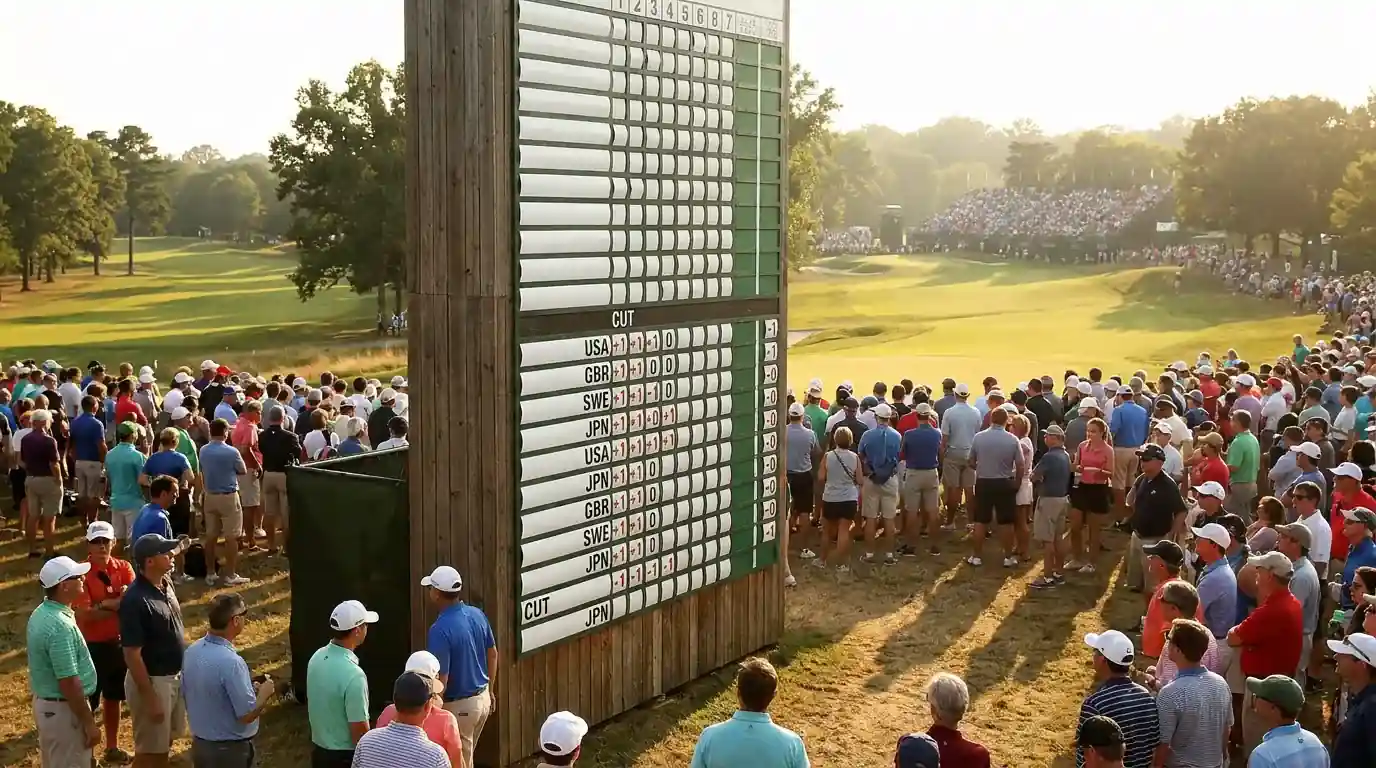
The other event-specific factor — fields skewed toward tour pros versus those carrying significant invitee or amateur components. The Masters carries roughly 89 invitees, no qualifiers; cut probability for tour pros is structurally higher than at a 156-player event with 28 categories of exemption. Account for the field composition before you price the line.
Sizing Tickets on a Short-Price Market
The bankroll dynamics on Make the Cut are unforgiving. A -300 favourite requires three units staked to win one — a £30 stake to win £10. A four-loss streak on a 75-per-cent strike rate is statistically frequent over a season; one of those streaks at full size empties the variance budget for the year.
The right unit size is small. 0.5 to 1 per cent of bankroll per ticket on favourite-side Make the Cut bets. Closer to 2 per cent on Miss the Cut tickets at plus money, because the strike rate target is lower and the unit return is higher per win. The asymmetry sounds counterintuitive — bigger units on the underdog side, smaller on the favourite — but it reflects the variance maths once you write it out. A £2000 bankroll runs Make the Cut tickets at £10 to £20 maximum, and Miss the Cut tickets at £30 to £40 when the edge analysis supports it.

Does the make the cut market settle on 36 holes or 54 holes?
Standard settlement is at the official 36-hole cut, regardless of weather delays. If a tournament is shortened to 54 holes due to weather, settlement still defaults to the cut decided after the second round of play, even if that round finishes on Saturday morning rather than Friday evening.
Is there a cut at LIV Golf events?
No. LIV Golf events are 54 holes with no cut. Every player who tees off Thursday morning plays through to Saturday afternoon. The Make the Cut market is structurally absent from LIV cards. If a bookmaker is offering one on a LIV event, something has gone wrong with the line setup.
Created by the ”Golf bet” editorial team.